

Monster Control Inc. 38
The dark history of deep winter
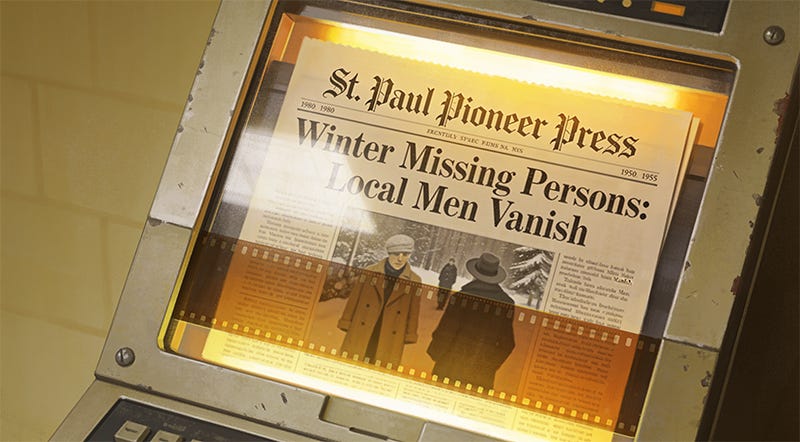
I spent the next morning at the university library, which turned out to be the most productive three hours I’d spent in a long time.
The DNR historical records weren’t digitized, though they were available as scanned microfiche, which was as much fun to work with as it sounds. But the pattern was recognizable once I knew what I was looking for.
January 1986: three fishermen missing from the deep section of Lake Minnetonka over a twelve-day period. Ruled accidental drowning by the Hennepin County Sheriff’s Office. Winter of 1985-86 had set cold records across the upper Midwest.
February 1951: four men gone from the same lake, same area, eight-day window. County records from that era were sparse, but a local newspaper account described the families as believing the men had encountered thin ice over the deep channel. Only the winter of 1950-51 had been the coldest in the region since records began.
I went back further. 1914. 1878. The gaps weren’t exactly thirty years or exactly forty, but they were in that range, and they all correlated with the same thing: winters cold enough to drive ice to record or near-record depths on the deep lakes.
The current winter, per the DNR’s own measurement data, was the coldest in forty years.
The ice on Lake Minnetonka’s deep section was thirty-one inches and still building.
I sat there for a moment with the printouts spread across the library table, thinking about Walter Two Horses and his grandfather’s cousins and the drag marks preserved in blood on the ice above the Pit.
We’d been operating on the assumption that this was something new, something that had shown up or been disturbed or wandered in from somewhere else. Monsters that showed up in the Twin Cities metro area tended to be like that, opportunistic, transient, and quite sensibly passing through before the long six months of winter began.
This creature was different. This thing had been here for a very long time, longer than the county had been keeping records, longer than the library’s archives went. It had been here when the Dakota first named the lake, when the first European trappers came through and when the wealthy old Minneapolis families like the Washburns, the Pillsburys, and the Rands built their grand summer houses on its shores.
It had been sleeping. Most of the time, it had been sleeping.
And the bitter cold of this winter had woken it up.
I gathered my printouts and called Carlson at the office.